
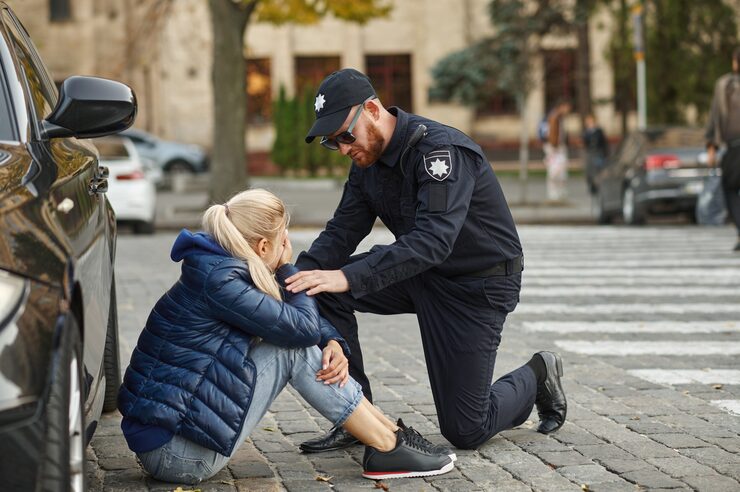

Pedestrian accident laws can allow an injured person to seek compensation when a driver’s negligence causes a collision. The details depend heavily on state traffic rules, negligence standards, insurance law, and the circumstances of the crossing or roadway.
Being a pedestrian does not automatically establish fault in either direction. Evidence remains central.
What Legal Duties Apply Around Pedestrians?
Drivers generally must operate with reasonable care and obey applicable traffic-control and right-of-way laws. Pedestrians also have responsibilities under state and local road rules.
NHTSA advises pedestrians to follow traffic signals, use sidewalks when available, and cross at appropriate locations, while drivers must remain alert for people walking. NHTSA pedestrian safety information
Actual liability still depends on the law and facts of the collision.
How Is Driver Negligence Evaluated?
Investigators may examine speed, visibility, traffic signals, crosswalk markings, driver distraction, impairment, lighting, and whether either party had enough time to react.
General injury law reading can explain common concepts, but a specific claim needs evidence tied to the actual street, traffic controls, and state law.
What If the Driver Blames the Pedestrian?
A pedestrian may face allegations of crossing outside a marked crossing, entering traffic suddenly, ignoring a signal, or failing to exercise reasonable care.
Those allegations do not automatically end a case. States apply different rules when more than one person may have contributed to an accident.
Which Evidence Should Be Preserved?
Photos taken soon after the collision can document signal locations, sight lines, lighting, road markings, obstructions, vehicle damage, and personal property.
Medical reports and organized injury claim documentation can establish another part of the case: what injuries occurred, what care was required, and what financial losses followed.
| Evidence | Possible Question Answered | Value |
|---|---|---|
| Surveillance video | How collision happened | May show movement |
| Scene photos | Road and visibility | Preserves conditions |
| Medical files | Nature of injuries | Supports damages |
| Wage records | Missed employment | Supports income loss |
What Compensation May Be Available?
Depending on state law and the evidence, recoverable damages may include reasonable medical expenses, lost earnings, property losses, pain and suffering, and certain future losses.
Hit-and-run or uninsured-driver cases may raise additional coverage questions. Policyholders reviewing denials or disputed coverage may benefit from keeping insurance review materials together with the policy and insurer correspondence.
A Crosswalk Does Not Decide Everything
People sometimes assume that being inside a marked crosswalk guarantees recovery or that crossing elsewhere automatically eliminates legal rights. Neither assumption should be applied nationwide.
Traffic laws differ, and negligence claims consider the actual circumstances. Signal timing, visibility, speed, driver conduct, pedestrian conduct, and state comparative-fault rules may all influence the analysis.
When Should an Injured Pedestrian Seek Legal Advice?
Legal help may be worth considering when injuries are substantial, fault is contested, a driver leaves the scene, several insurance policies are involved, or a government vehicle or dangerous public-road condition may have contributed.
Claims involving public agencies can carry special procedures or shorter notice periods, so delay can create problems even before an ordinary lawsuit deadline expires.
Frequently Asked Questions
Can a pedestrian recover compensation after a hit-and-run?
Potentially. Available options may include locating the driver or making a claim under applicable uninsured-motorist coverage, depending on state law and the insurance policy.
Can a pedestrian be partly responsible for an accident?
Yes. A pedestrian’s actions may be considered when determining fault. The financial effect of shared responsibility differs among states.
Does the police report determine who wins the claim?
No. A police report can be useful evidence, but insurers, lawyers, judges, or juries may consider additional testimony, video, physical evidence, and applicable law.
Document the Scene Before It Changes
Pedestrian cases often depend on details that disappear quickly: lighting, temporary obstructions, traffic conditions, witnesses, and video recordings. Early documentation can preserve those facts. Because right-of-way rules and negligence standards are state-specific, legal rights should be evaluated under the law governing the location of the collision.
This article provides general legal information and is not a substitute for advice from a qualified attorney about a specific case.






Leave a Reply